Why 70% of Reps Miss Quota: The Hidden Cost of Tribal Knowledge

Your best rep just closed another deal. Your newest rep just lost one. Same product. Same territory quality. Similar opportunities.
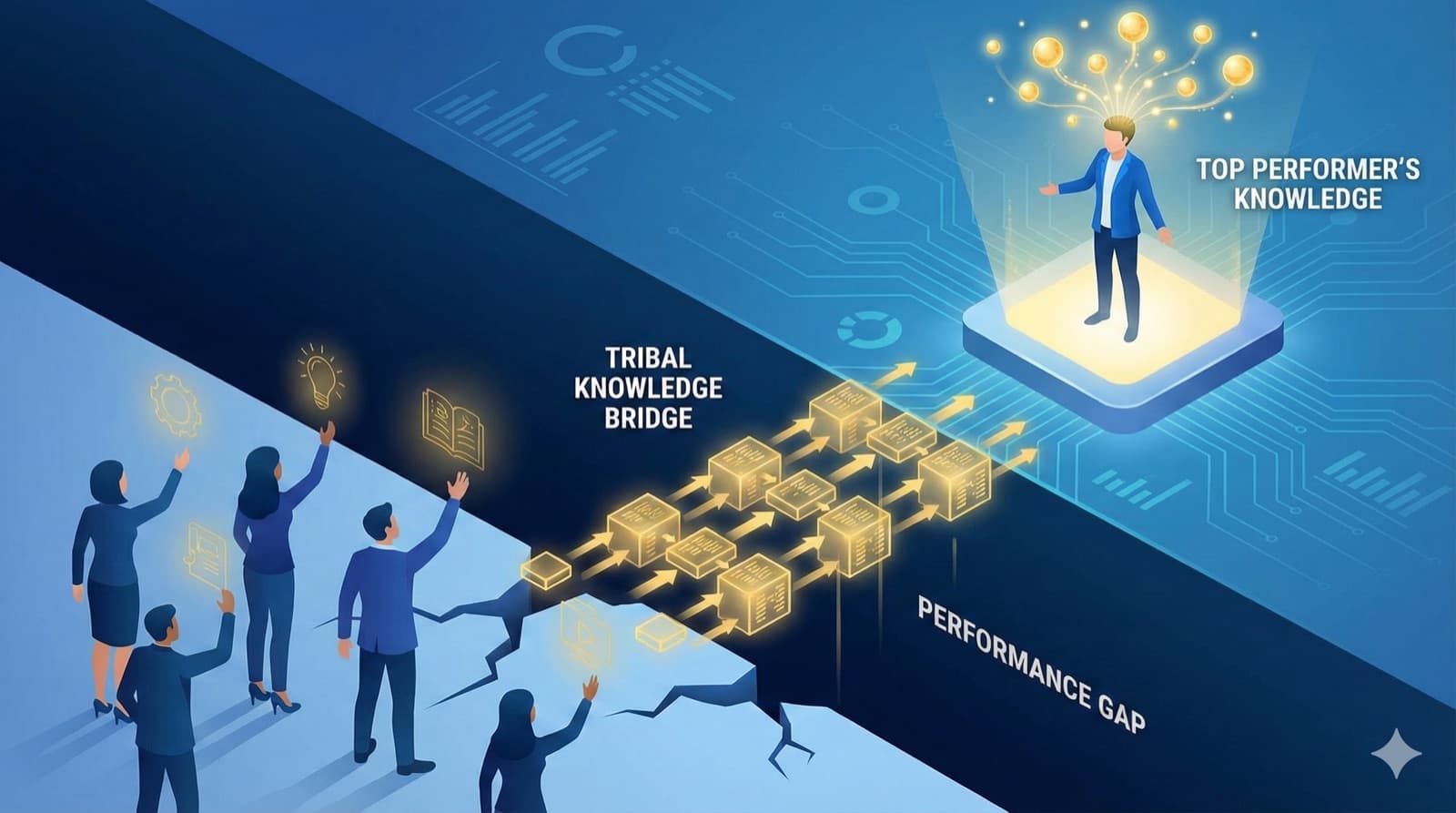
The difference isn't talent or effort—you hired smart people. The difference is what your best rep knows that your newest rep doesn't. And crucially: there's no systematic way to transfer that knowledge.
This is the tribal knowledge problem. And while the "70% of reps miss quota" statistic gets cited constantly (the exact number varies by source and how quotas are set), the underlying pattern is consistent: most reps underperform relative to top performers, and the gap is largely about knowledge that hasn't been systematized.
The Tribal Knowledge Trap
Every sales organization has two groups of people:
Your Top 5 Reps
- Deeply understand the product and positioning
- Know exactly which story to tell each persona
- Handle objections before customers even raise them
- Close 2-3.5x more than the average rep
Your Next 45 Hires
- Read the docs but can't internalize the knowledge
- Search Confluence and find 12 versions of the same case study
- Learned MEDDIC in training, struggle to apply it in deals
- Take 6-9 months to become productive
The difference between these groups isn't talent or effort. It's access to tribal knowledge—the unwritten rules, instinctive responses, and pattern recognition that top performers have accumulated over years.
What Is Tribal Knowledge?
Tribal knowledge is the know-how that exists only in people's heads. It's never been documented, or if it has, the documentation is outdated and buried.
In sales, tribal knowledge includes:
1. Winning Patterns
- Which objections actually close deals (not just overcome them)
- What questions to ask each persona at each stage
- How to sequence a multi-threaded deal
- When to bring in executives and when to hold them back
2. Customer Insights
- What really matters to compliance buyers (hint: it's not features)
- Why fintech deals always stall at legal review
- The hidden stakeholder who kills enterprise deals
- Which references actually move needle for CFOs
3. Product Intuition
- Which features to lead with for which use cases
- The configuration that 80% of customers actually use
- Integration questions that signal a serious buyer
- Technical objections that are actually buying signals
4. Competitive Intelligence
- What Competitor X says about you (and how to counter it)
- The real weaknesses of Competitor Y (not the marketing version)
- Why customers who evaluate Competitor Z often come back to you
- Pricing games competitors play and how to navigate them
Your top performers know all of this. They've learned it through years of calls, deals, wins, and losses.
Your new hires don't know any of it. And they can't Google it.
The Real Cost of Tribal Knowledge Loss
When critical knowledge lives only in people's heads, you pay in multiple ways:
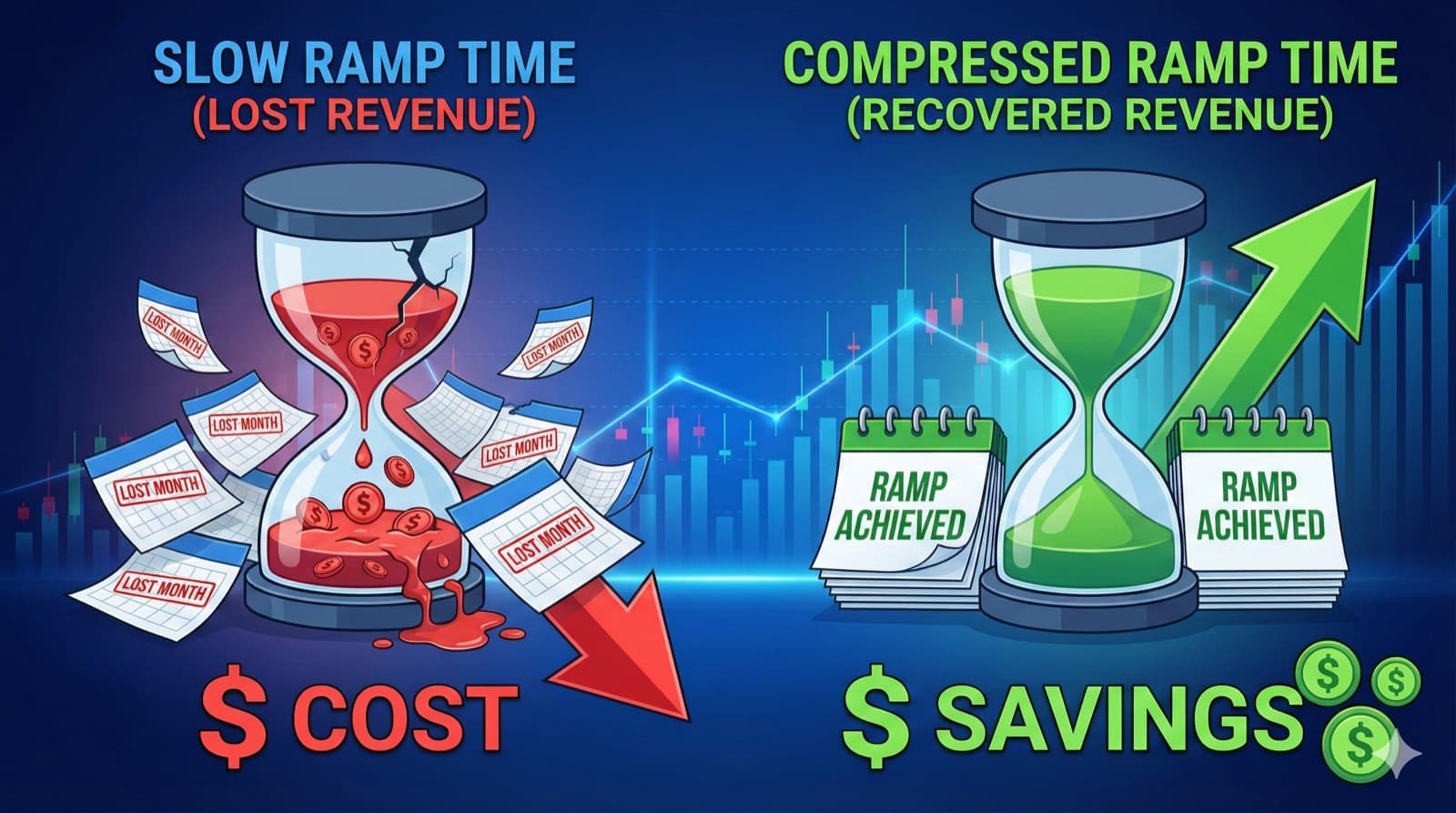
1. Extended Ramp Time
Industry average: 6-9 months to full productivity With tribal knowledge gaps: 9-12+ months
New reps have to figure out what veterans know through trial and error. Every lost deal is a "learning experience"—an expensive one.
Cost per rep: $150,000+ in opportunity cost during extended ramp
2. Performance Gap
Top 10% of reps: 2-3.5x average performance This gap represents: $200K-$2M+ in annual revenue per rep
If your average rep is at 50% of a top performer, you're leaving half your potential revenue on the table. For a team of 20 reps, that's millions annually.
3. Turnover Risk
When a top performer leaves, they take their tribal knowledge with them:
- Relationships they've built
- Patterns they've recognized
- Shortcuts they've discovered
- Deals they were cultivating
Cost to replace: $115,000+ per experienced rep (recruiting, training, ramp)
4. Inconsistent Execution
Without systematized knowledge:
- Same objections get different responses
- Discovery varies by who runs the call
- Messaging depends on who the customer talks to
- Customer experience becomes unpredictable
5. Scaling Ceiling
You can't scale what you can't systematize. As you grow from 5 to 50 reps:
- Founders can't be on every call
- Top performers can't shadow every new hire
- Training sessions can't cover every scenario
- The knowledge gap compounds with each hire
What Doesn't Work (And Why)
Most organizations have tried some version of solving this. The approaches tend to fail for predictable reasons:
The "Document Everything" Approach
The idea: Get top performers to write down what they know. The reality:
- They're too busy selling to document
- Written docs become outdated immediately
- 10,000 pages of content is worse than 0 (no one reads it)
- Static documents don't capture context or nuance
The "Ride-Along" Approach
The idea: Have new reps shadow top performers. The reality:
- Top performers resent losing selling time
- Shadowing doesn't scale beyond a few hires
- New reps learn what to do, not why
- No reinforcement after shadowing ends
The "Weekly Training" Approach
The idea: Regular training sessions to share knowledge. The reality:
- 90% of training content is forgotten within a week
- Sessions cover general topics, not specific situations
- What you learn Friday doesn't apply to Monday's call
- Knowledge transfer is one-way, not interactive
The "Content Library" Approach
The idea: Build a searchable repository of best practices. The reality:
- Reps spend significant time searching (exact numbers vary, but it's substantial)
- Most content goes unused
- Multiple versions of the same document accumulate
- No context for when to use what
The Solution: Systematizing Tribal Knowledge
The answer isn't more documentation or more training. It's building a system that:
- Captures what top performers know
- Delivers that knowledge in context
- Reinforces it continuously
- Evolves as your product and market change
Here's what that looks like:
Step 1: Identify the Critical Knowledge
Not all tribal knowledge is equally valuable. Focus on:
High-impact moments:
- First discovery call with a new persona
- Pricing and negotiation conversations
- Competitive head-to-head situations
- Executive sponsor meetings
- Legal and procurement navigation
Common failure points:
- Where do deals most often stall?
- What objections trip up average reps?
- Which questions do new reps forget to ask?
- Where does messaging go off-script?
Step 2: Extract from Top Performers
The best knowledge extraction isn't documentation—it's conversation:
Interview approach:
- Record and transcribe winning calls
- Ask "what would you tell a new rep about this?"
- Focus on scenarios, not general advice
- Capture the "why" not just the "what"
Pattern recognition:
- What do your top 3 closers all do?
- What questions do they always ask?
- How do they sequence their deals?
- What content do they actually use?
Step 3: Deliver in Context
Knowledge is only useful when it's accessible at the moment of need:
Meeting prep: Before every call, surface relevant:
- Persona-specific messaging
- Industry case studies
- Known objections and responses
- Competitive positioning if relevant
Live assistance: During calls, provide:
- Product answers on demand
- Objection handling suggestions
- Next-step recommendations
- Talk tracks for tricky situations
Deal guidance: Throughout the sales process, prompt:
- Missing qualification information
- Stakeholders not yet identified
- Risks based on similar deals
- Optimal next actions
Step 4: Reinforce Continuously
One-time knowledge transfer doesn't work. Build in reinforcement:
- Surface the same concepts in different contexts
- Track what reps actually use vs. ignore
- Celebrate wins that came from applying knowledge
- Update content based on what's working
Step 5: Make It Living
Tribal knowledge isn't static—your product, market, and competitors change:
- Assign owners to each knowledge area
- Set review cadences (monthly, quarterly)
- Build feedback loops from the field
- Retire outdated content proactively
The Path from Tribal to Systematic
Organizations go through predictable stages as they systematize tribal knowledge:
Stage 1: Chaos (Most companies)
- Knowledge is scattered across heads and documents
- New reps figure it out on their own
- Performance is highly variable
- Ramp takes 6-9+ months
Stage 2: Documented
- Best practices written down
- Searchable content library exists
- Training materials available
- But still not applied consistently
Stage 3: Accessible
- Knowledge organized by use case
- Findable within seconds
- Curated and maintained
- But still requires reps to search
Stage 4: Embedded
- Knowledge surfaces automatically in context
- Methodology built into workflow
- Continuous reinforcement
- No searching required
Stage 5: Intelligent
- System learns from wins and losses
- Recommendations personalized by rep/deal
- Knowledge evolves automatically
- Gap between top and average narrows
Most companies are stuck at Stage 1 or 2. The goal is Stage 4 or 5.
Measuring Progress
How do you know if you're successfully systematizing tribal knowledge?
Leading Indicators
- Knowledge usage: Are reps accessing and using content?
- Search time: How long to find an answer?
- Training retention: Can reps apply what they learned?
- Coaching consistency: Same feedback from different managers?
Lagging Indicators
- Ramp time: Time to first closed deal
- Performance gap: Ratio of top to average rep performance
- Quota attainment: Percentage of reps hitting target
- Win rate: Percentage of qualified opportunities closed
The Ultimate Metric
The tribal knowledge gap is closed when:
- A rep hired today performs like a rep hired 2 years ago
- Within their first 90 days, not their first 9 months
- Without requiring constant shadowing or coaching
- Regardless of which veteran happens to sit near them
Taking Action
Ready to start closing the tribal knowledge gap? Here's your 30-day plan:
Week 1: Diagnose
- Survey recent hires: "What do you wish you'd known earlier?"
- Interview top performers: "What do new reps always get wrong?"
- Review lost deals: Where did knowledge gaps hurt?
Week 2: Prioritize
- Identify top 5 tribal knowledge gaps
- Map to revenue impact (deals lost, ramp delayed)
- Choose the highest-impact gap to address first
Week 3: Extract
- Record top performers handling the situation
- Transcribe and analyze winning patterns
- Create first version of systematic approach
Week 4: Deliver
- Get the knowledge in front of reps who need it
- Measure usage and gather feedback
- Iterate based on what's working
Repeat monthly for the next highest-impact gap.
An Honest Assessment
We're bullish on systematizing tribal knowledge—it's a core part of what RevWiser does. But we should be honest about limitations:
This takes ongoing work. You can't capture knowledge once and be done. Products change, markets shift, competitors evolve. Tribal knowledge systems need maintenance.
Not all knowledge transfers well. Some expertise is genuinely tacit—pattern recognition built over years of experience. Systems can help with the articulable parts, but judgment develops over time.
Implementation varies by company. What works for a 20-person sales team selling $100K deals looks different from a 200-person team selling $10K deals. The principles are similar but the execution isn't.
That said, most organizations are nowhere near the frontier of what's possible. If you're currently in Stage 1 (chaos) or Stage 2 (documented but not used), there's significant room for improvement regardless of the tools you choose.
The Bottom Line
The performance gap between your best and average reps isn't primarily about talent—it's about access to knowledge that hasn't been systematized.
Closing that gap requires moving from "knowledge exists somewhere" to "knowledge arrives when needed." Whether you build that system yourself or use tools like ours, the principle is the same: your top performers' expertise should be everyone's advantage, not a competitive moat they carry in their heads.
RevWiser systematizes tribal knowledge by connecting product information, sales methodology, and deal context into guidance that surfaces when reps need it. If the knowledge gap is costing you deals, let's talk.
RevWiser Team
Content writer at RevWiser, focusing on go-to-market strategies and sales enablement.